How to Grow Tomatoes in Pots: The Complete Beginner's Guide
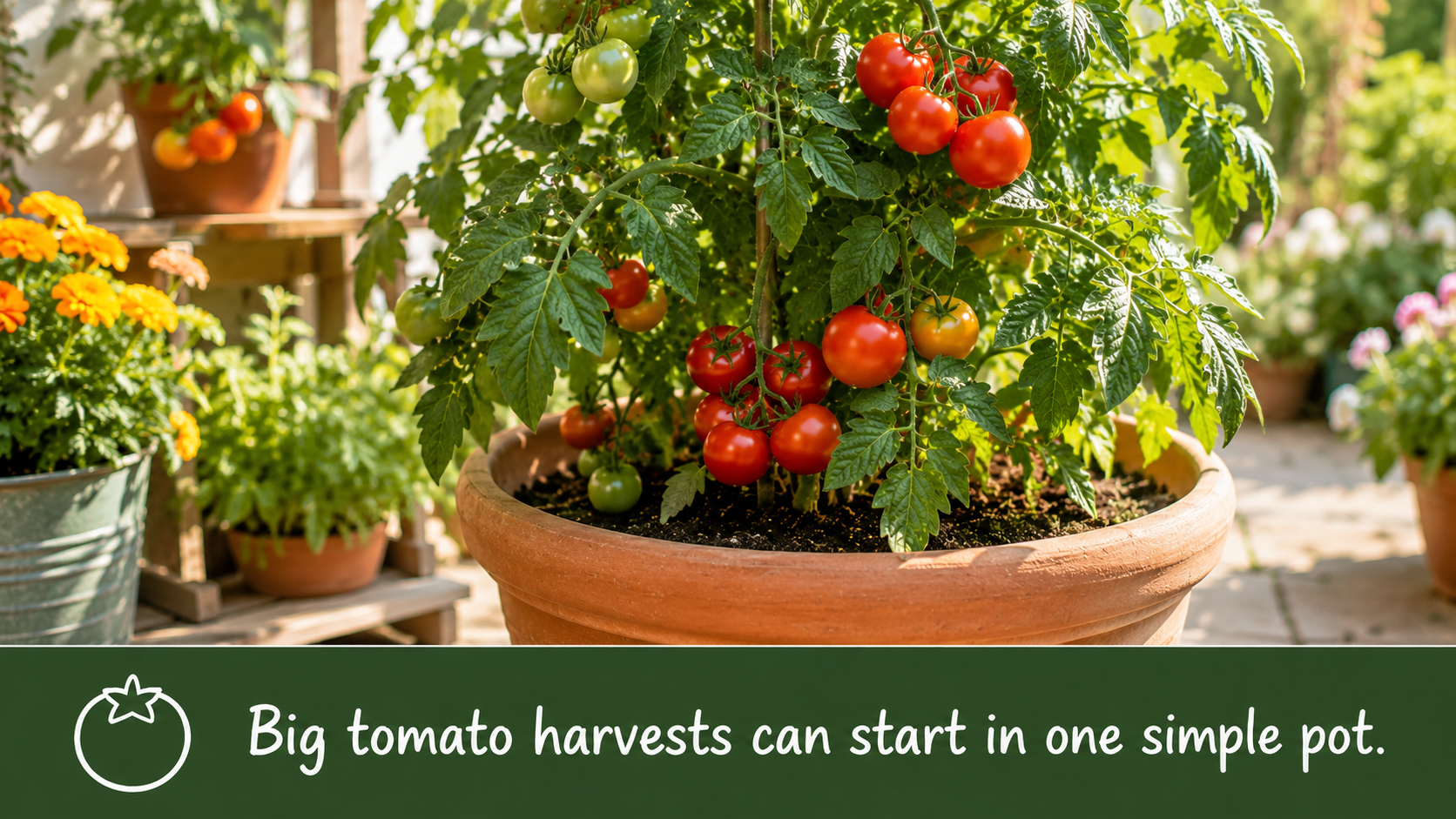
Big tomato harvests can start in one simple pot.
You do not need a huge garden, raised beds, or a greenhouse to grow sweet, juicy tomatoes at home.
A sunny patio, balcony, doorstep, driveway, or small corner by a wall can be enough. With one large pot, good compost, steady watering, and the right tomato variety, you can grow beautiful homegrown tomatoes in a surprisingly small space.
Growing tomatoes in pots is one of the most satisfying ways to start gardening. You do not need a big garden, raised beds, or a greenhouse. A sunny balcony, patio, doorstep, driveway, or small corner by a wall can be enough to grow sweet, juicy, homegrown tomatoes.
The best part? Potted tomatoes are easy to keep close to the house, easy to water, and easy to check every day. There is something genuinely joyful about walking past your tomato plant in the morning and seeing new yellow flowers, green fruits swelling, and the first red tomato slowly ripening in the sun.
But tomatoes in pots do need a little extra care. A container is a smaller growing space than the ground, so the plant depends on you for water, food, support, and healthy compost.
This guide will show you exactly how to grow tomatoes in pots, from choosing the right variety to picking your first ripe fruit.
Quick Answer: How Do You Grow Tomatoes in Pots?
To grow tomatoes in pots successfully, choose a large container with drainage holes, fill it with good-quality peat-free potting compost, plant one tomato plant deeply, place it somewhere with 6–8 hours of sun, water consistently, feed once fruit starts forming, and support the plant early with a cane, cage, or trellis.
For beginners, bush or patio tomato varieties are usually easiest because they stay compact and need less pruning.
Why Grow Tomatoes in Pots?
Growing tomatoes in pots is perfect if you:
- Have a small garden, balcony, or patio
- Rent your home and cannot dig garden beds
- Want tomatoes close to the kitchen
- Want better control over soil and watering
- Are new to gardening and want a simple first project
- Want to grow food even without a vegetable patch
Pots also make tomato growing feel more manageable. Instead of looking after a whole vegetable garden, you can start with one healthy plant in one large container.
One plant. One pot. One sunny spot. That is enough to begin.
1. Choose the Best Tomato Variety for Pots
Not every tomato plant behaves the same way. Some stay small and bushy, while others grow into tall vines that need strong support.
Choosing the right type makes container growing much easier.
Best Tomato Types for Pots
| Tomato Type | Best For | Container Suitability |
|---|---|---|
| Determinate / Bush tomatoes | Beginners, patios, balconies | Excellent |
| Dwarf tomatoes | Small spaces, compact growing | Excellent |
| Cherry tomatoes | Sweet snacks, kids, salads | Very good |
| Indeterminate / Cordon tomatoes | Bigger harvests, experienced growers | Good, but need bigger pots and support |
Determinate Tomatoes
Determinate tomatoes are also called bush tomatoes. These are usually the best choice for pots.
They grow to a fixed size, often around 2–4 feet tall, then produce fruit over a shorter period. They do not usually need heavy pruning, and many can be grown with a simple stake or cage.
Good container-friendly varieties include:
Tiny TimTumbling TomPatio PrincessBush Early GirlWindow Box RomaPatio Choice Yellow
These are ideal if you want a neat plant that does not take over your balcony.
Indeterminate Tomatoes
Indeterminate tomatoes are also called cordon or vining tomatoes. These keep growing taller and producing fruit until cold weather stops them.
They can grow very well in pots, but they need:
- A larger container
- Strong support
- Regular tying in
- More feeding
- More pruning
Popular indeterminate tomatoes include cherry types such as Sungold, Sweet Million, and Gardener’s Delight.
If you are a beginner, start with a bush variety first. Once you have grown one successful potted tomato, you can try taller varieties.
2. Choose the Right Pot Size
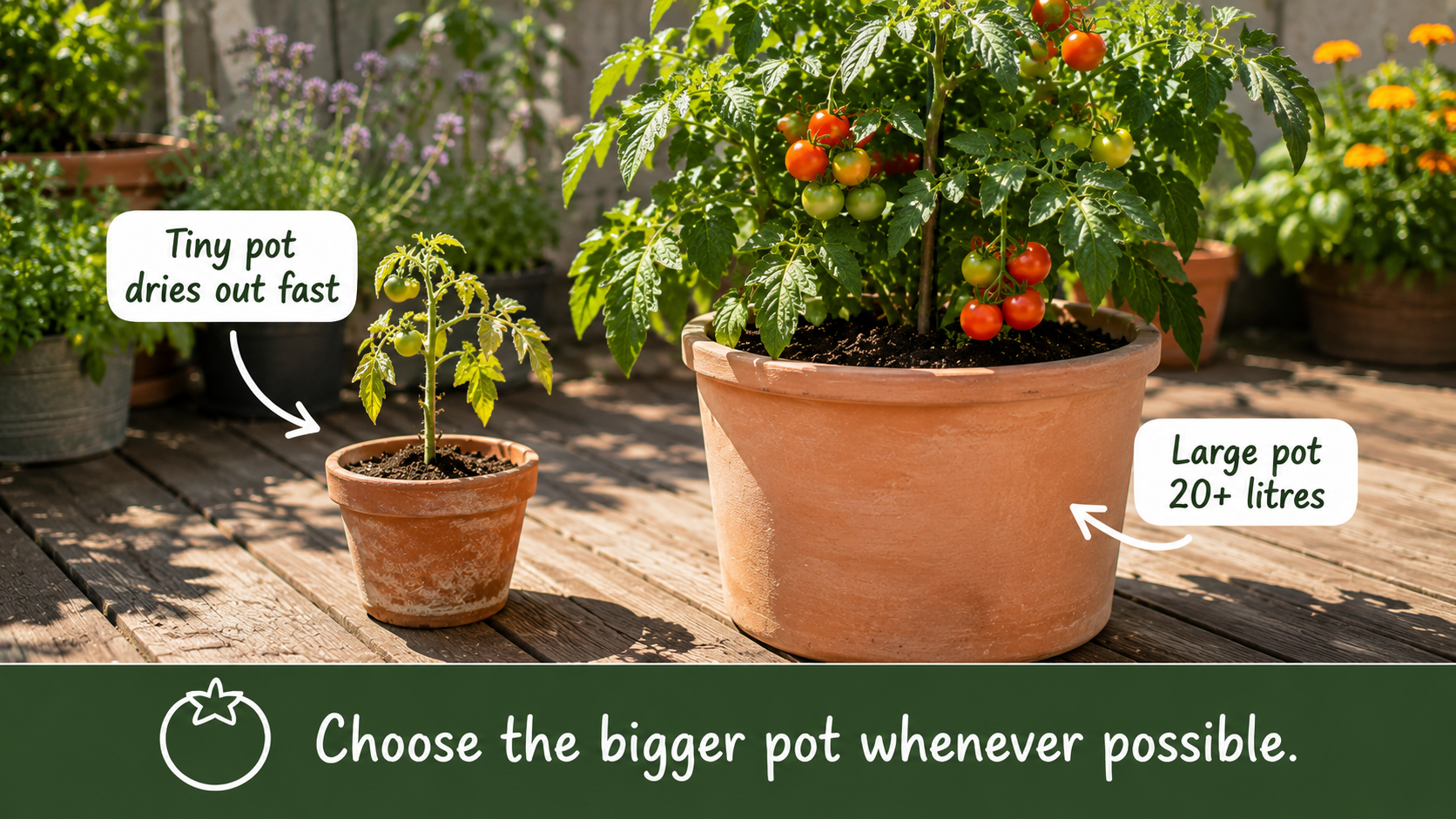
The pot is your tomato plant’s whole world. If the container is too small, the roots dry out quickly, the plant becomes stressed, and your harvest will usually be smaller.
A bigger pot gives the roots more room, holds moisture for longer, and makes watering much easier.
Tomato Pot Size Guide
| Tomato Type | Minimum Pot Size | Better Pot Size |
|---|---|---|
| Small dwarf tomato | 20–25cm pot | 30cm pot |
| Patio or bush tomato | 30cm pot / 10–15 litres | 35–45cm pot / 20 litres |
| Standard tomato plant | 5-gallon bucket / about 20 litres | 30 litres or more |
| Large cordon tomato | 30 litres | 40–60 litres |
For most home gardeners, a large 30–45cm pot or a 5-gallon bucket-sized container is a good starting point for one tomato plant.
Do not squeeze several tomato plants into one small pot. One healthy plant in a large pot is better than three stressed plants in a cramped container.
3. Make Sure the Pot Has Drainage
Drainage is essential. Tomato roots need moisture, but they also need oxygen. If the pot stays waterlogged, the roots can rot and the plant may collapse.
Your container should have:
- Several drainage holes in the bottom
- Space for water to escape freely
- No blocked holes
- A saucer only if you empty excess water after watering
If you are using a plastic bucket, storage tub, or recycled container, drill drainage holes before planting.
A simple rule: water should be able to run out of the bottom of the pot.
4. Should You Use Pots or Grow Bags?
Both pots and grow bags can work well.
Traditional Pots
Plastic, terracotta, ceramic, and wooden containers can all be used for tomatoes. Plastic pots are lightweight and hold moisture better than terracotta, which dries out faster.
Terracotta looks beautiful, but in hot weather it may need more frequent watering.
Fabric Grow Bags
Fabric grow bags are also excellent for tomatoes. They allow air to reach the root zone and usually drain very well. They are especially useful on patios and balconies.
The only downside is that grow bags can dry out faster during hot weather, so you may need to water more often.
Standard Tomato Grow Bags
You can also grow tomatoes in long compost grow bags. These are popular in the UK, especially in greenhouses and patios.
For best results, do not overcrowd them. Two tomato plants in a standard grow bag is usually easier to manage than three.
5. Use the Right Compost or Potting Mix
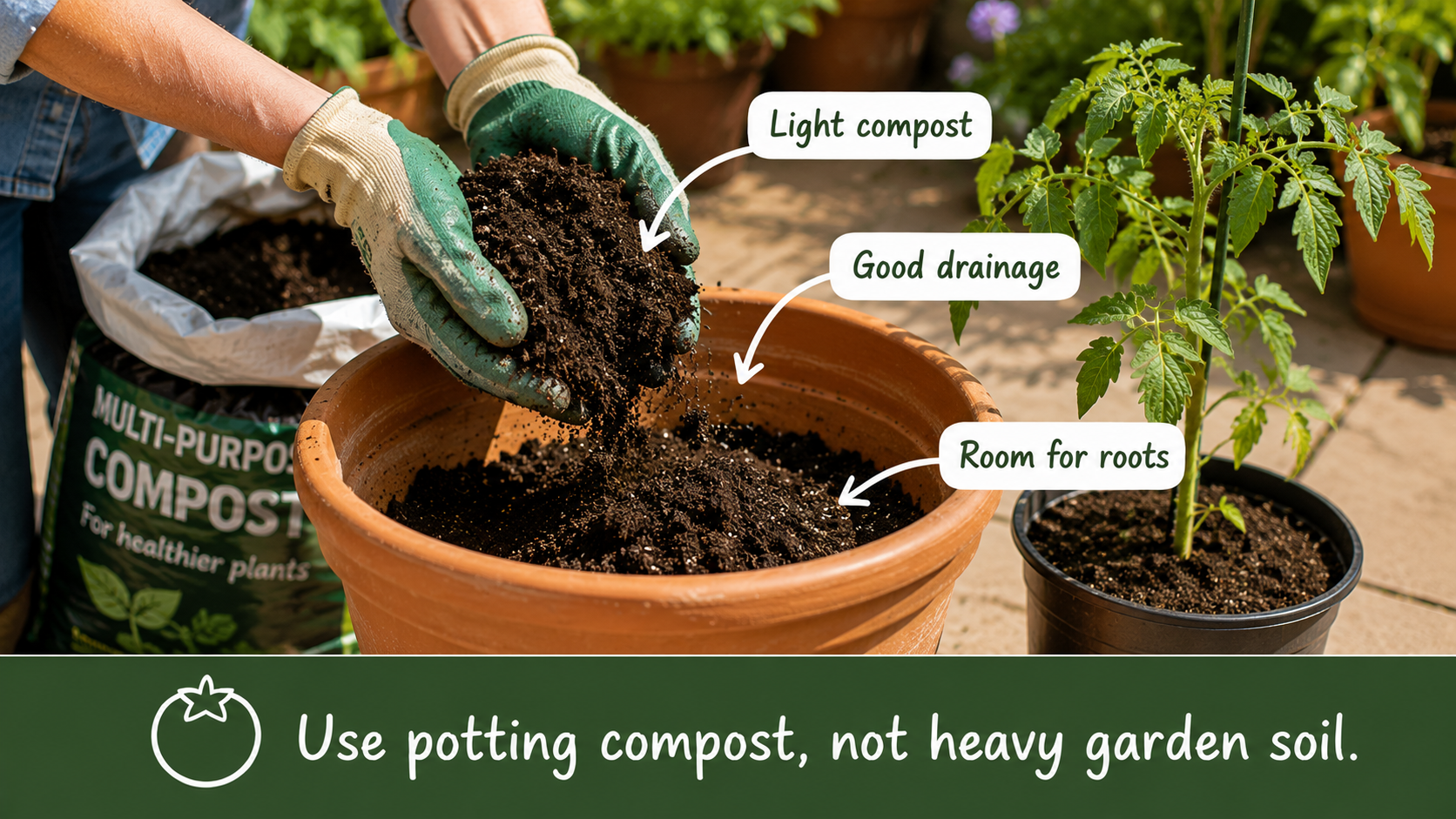
Do not fill your tomato pot with ordinary garden soil.
Garden soil is usually too heavy for containers. It can become compacted, drain badly, and may carry weeds, pests, or disease. In a pot, tomatoes need a lighter growing medium that holds moisture but still lets air reach the roots.
Use:
- Peat-free multipurpose compost
- Peat-free tomato compost
- Peat-free vegetable compost
- A good-quality container potting mix
A strong potting mix should feel light, crumbly, and moisture-retentive, not sticky and heavy.
Simple Potting Mix for Tomatoes in Pots
For a beginner-friendly mix, use:
- 2 parts peat-free multipurpose compost
- 1 part well-rotted compost or organic matter
- Optional: a handful of perlite for extra drainage
- Optional: worm castings for a gentle nutrient boost
You do not need to make this complicated. A good bagged peat-free compost is enough to get started.
6. Clean Old Pots Before Reusing Them
If you are reusing old pots, give them a quick clean before planting.
Old pots can hold dried compost, pests, or disease spores from previous plants. Wash them with warm soapy water, rinse well, and let them dry.
This small job helps give your new tomato plant a fresh, healthy start.
7. When to Plant Tomatoes in Pots
Tomatoes are warm-season plants. They hate frost and cold nights.
Plant tomatoes outside only when:
- The risk of frost has passed
- Night temperatures are consistently mild
- The plant has been hardened off
- The weather is settled enough for outdoor growing
In the UK, this is often around late May or early June for outdoor tomatoes, depending on your local weather. In a greenhouse, you can usually plant earlier.
If you are unsure, wait a little longer. A tomato planted into warmth will often grow faster than one planted too early into cold conditions.
8. Harden Off Young Tomato Plants
If your tomato plant was grown indoors, in a greenhouse, or bought from a garden centre, it needs time to adjust to outdoor life.
This process is called hardening off.
For 7–10 days, gradually introduce the plant to outdoor conditions:
- Put it outside in a sheltered, shady spot for a couple of hours.
- Bring it back inside or under cover.
- Increase the time outside each day.
- Slowly introduce more sun and breeze.
- Keep it protected from cold nights.
Hardening off prevents shock, leaf scorch, and sudden wilting.
9. How to Plant Tomatoes Deeply
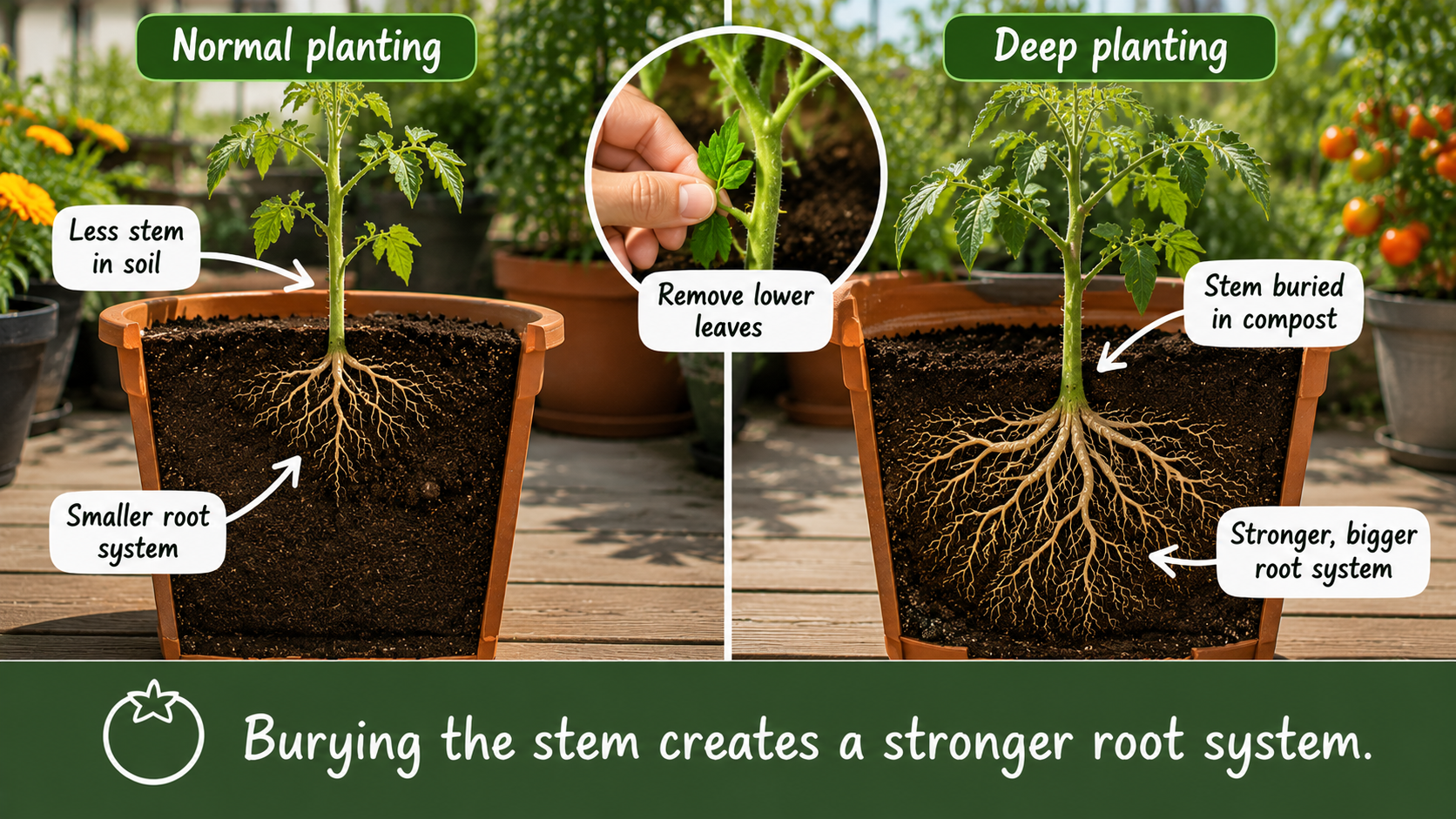
Tomatoes have a special trick: they can grow roots from their buried stems.
This means you can plant them deeper than they were in their original pot. Deep planting creates a stronger root system, which helps the plant take up more water and nutrients.
How to Plant a Tomato in a Pot
- Fill the pot partway with compost.
- Remove the tomato plant from its small pot.
- Pinch off the lowest leaves.
- Place the plant in the container.
- Bury the stem deeply, leaving the top leaves above the compost.
- Firm the compost gently around the plant.
- Water well.
If your seedling is tall and leggy, you can plant it slightly sideways or at an angle, burying part of the stem. The top will naturally grow upward toward the light.
10. Put Support in Early
Add support at planting time, not later.
If you push a cane or cage into the pot after the plant has grown, you may damage the roots. It is much easier and safer to put support in while planting.
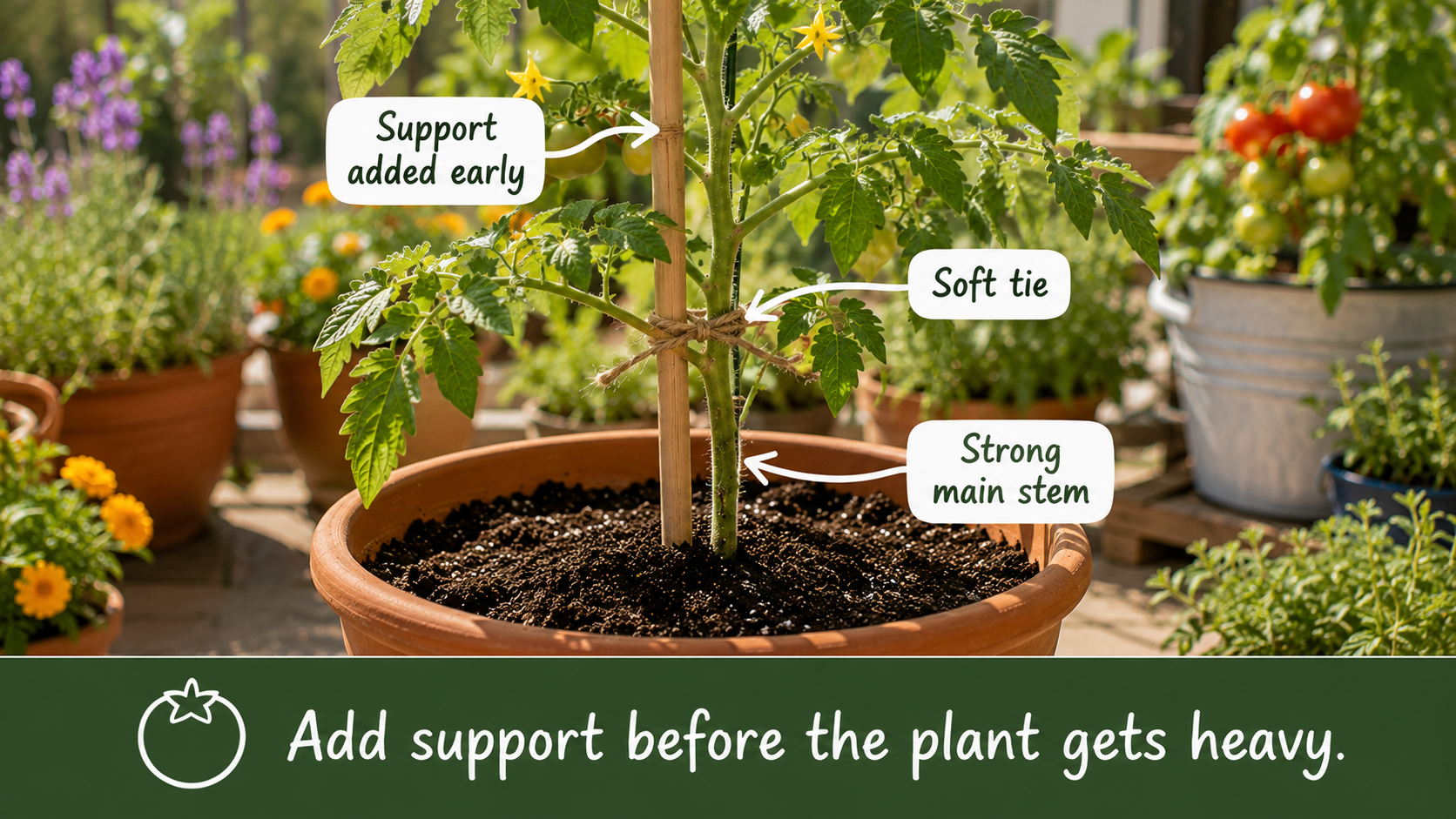
Good support options include:
- Bamboo cane
- Tomato cage
- Wooden stake
- String support
- Small trellis
- Obelisk frame
Bush tomatoes may only need a short stake or cage. Tall cordon tomatoes need stronger support and regular tying in.
As the plant grows, loosely tie the stem to the support using soft garden twine. Do not tie it too tightly, because the stem will thicken.
11. Choose the Best Place for Your Potted Tomato
Tomatoes love sunshine.
Choose the sunniest spot you have. Ideally, tomatoes need 6–8 hours of direct sunlight per day.
Good places include:
- South-facing patio
- Sunny balcony
- Sheltered wall
- Greenhouse
- Conservatory with good ventilation
- Bright courtyard
- Sunny driveway
A warm wall can help because it absorbs heat during the day and releases it slowly in the evening.
Protect Tomatoes from Strong Wind
Potted tomatoes can dry out quickly in windy spots. Wind can also snap stems, damage leaves, and knock pots over.
If your balcony or patio is windy, place the pot somewhere sheltered or secure the support firmly.
12. How Often to Water Tomatoes in Pots
Watering is the most important part of growing tomatoes in pots.
Potted tomatoes dry out much faster than tomatoes growing in the ground. During hot weather, a large plant can drink a surprising amount of water.
The Simple Watering Rule
Keep the compost evenly moist, but not soggy.
Do not let the pot swing between bone dry and soaking wet. That stress can lead to problems such as fruit splitting and blossom end rot.
The Finger Test
Push your finger about 5cm into the compost.
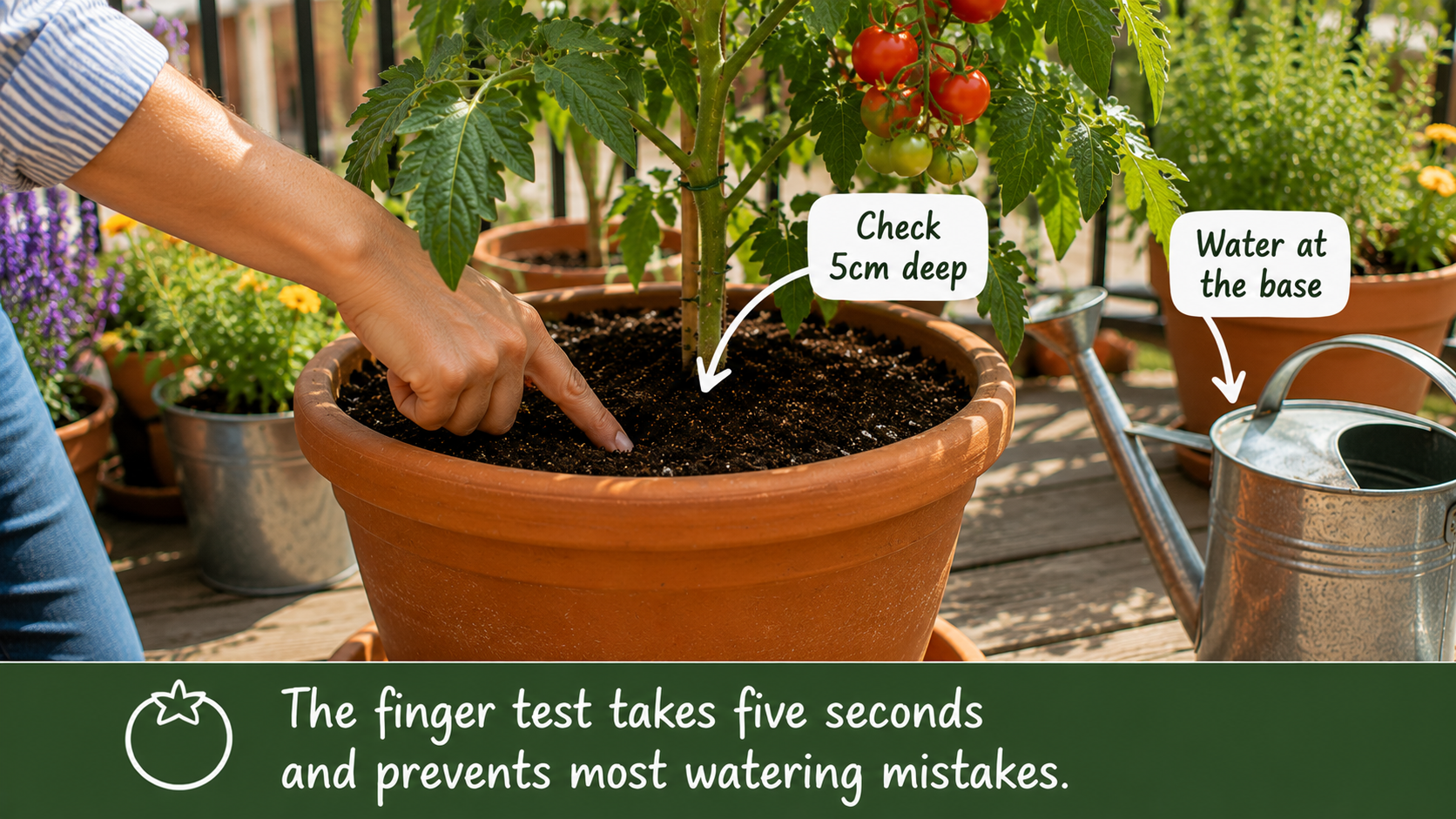
- If it feels moist, wait.
- If it feels dry, water.
- If it feels wet and heavy, do not water yet.
How to Water Correctly
Water slowly at the base of the plant until water runs out of the drainage holes. This encourages the roots to grow deeper into the pot.
Avoid splashing the leaves if possible. Wet leaves can encourage fungal problems, especially in still or humid conditions.
How Often Will You Need to Water?
In mild weather, you may water every couple of days.
In hot summer weather, you may need to water:
- Once a day
- Twice a day during heatwaves
- More often for small pots or grow bags
Morning is usually the best time to water. In very hot weather, check again in the evening.
13. Feed Tomatoes for More Fruit
Tomatoes are hungry plants. In pots, nutrients wash out gradually as you water, so feeding is important.
At planting time, you can mix in a slow-release fertiliser suitable for vegetables. Then, once the first flowers or small fruits appear, begin feeding with a tomato fertiliser.
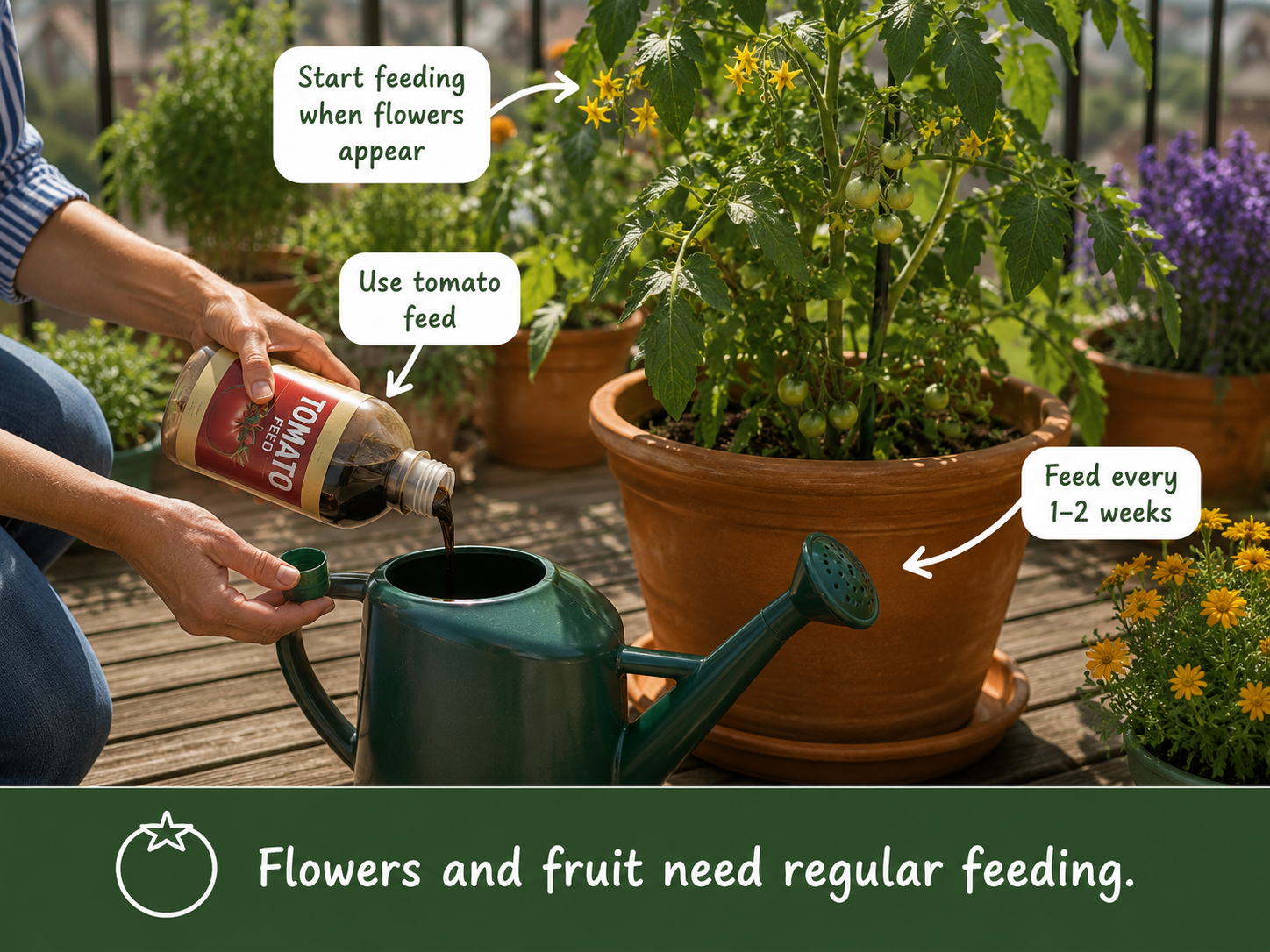
Simple Feeding Schedule
| Growth Stage | What to Do |
|---|---|
| At planting | Use fresh compost and optional slow-release fertiliser |
| When flowers appear | Start liquid tomato feed |
| When fruit is forming | Feed every 1–2 weeks |
| Late season | Keep feeding while the plant is still producing |
Use a fertiliser designed for tomatoes or fruiting vegetables. These are usually higher in potassium, which helps flowers and fruit.
Avoid using too much high-nitrogen fertiliser once the plant is flowering. Too much nitrogen can create lots of leafy growth but fewer tomatoes.
14. Should You Prune Tomatoes in Pots?
This depends on the type of tomato you are growing.
Bush Tomatoes
Bush or determinate tomatoes usually need little or no pruning.
Do not remove lots of side shoots from bush tomatoes, because you may reduce your harvest. Just remove yellowing, damaged, or diseased leaves.
Cordon Tomatoes
Cordon or indeterminate tomatoes usually need more pruning.
Remove the small side shoots, often called suckers, that grow in the joint between the main stem and a leaf branch. This helps keep the plant tidy and encourages it to focus energy on fruit.
You can pinch these off with your fingers when they are small.
15. Improve Airflow Around the Plant
Good airflow helps keep tomato plants healthy.
Once the plant is established, remove the lowest leaves if they are touching the compost or blocking airflow around the base. This helps reduce the chance of soil splashing onto the leaves when you water.
You do not need to strip the plant bare. Just keep the lower part tidy and remove leaves that look yellow, damaged, or diseased.
16. Help Tomato Flowers Pollinate
Tomatoes are self-pollinating, which means each flower contains what it needs to make fruit. But the pollen still needs movement to shift inside the flower.
Outdoors, wind and insects usually help with this. On a sheltered balcony or inside a greenhouse, the air can be very still.
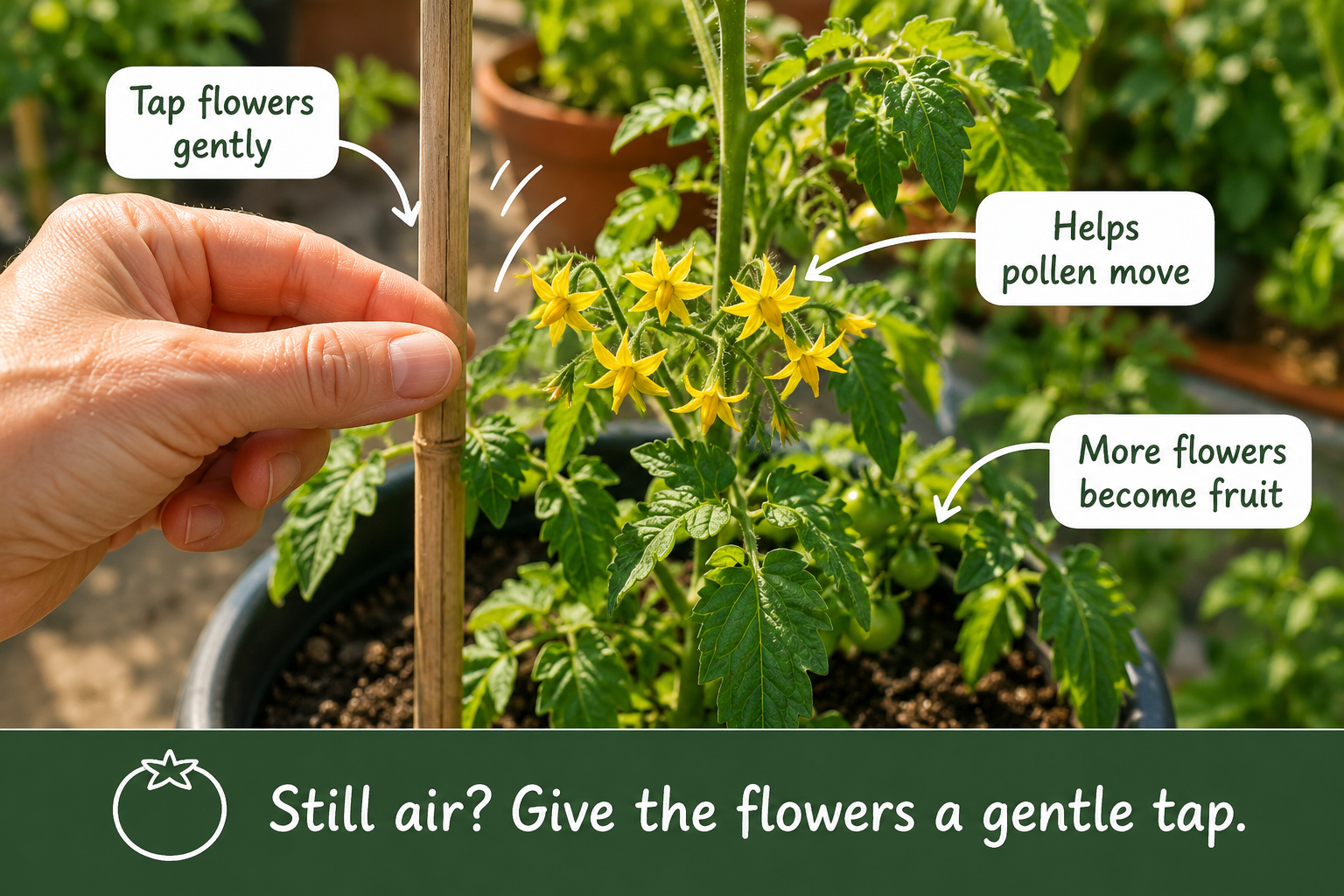
To help pollination, gently tap or shake the flower clusters when they are open. You can also lightly tap the support cane.
This only takes a few seconds and can help more flowers turn into tomatoes.
17. Common Problems When Growing Tomatoes in Pots
Even healthy tomato plants can run into problems. The good news is that most issues are easy to spot early.
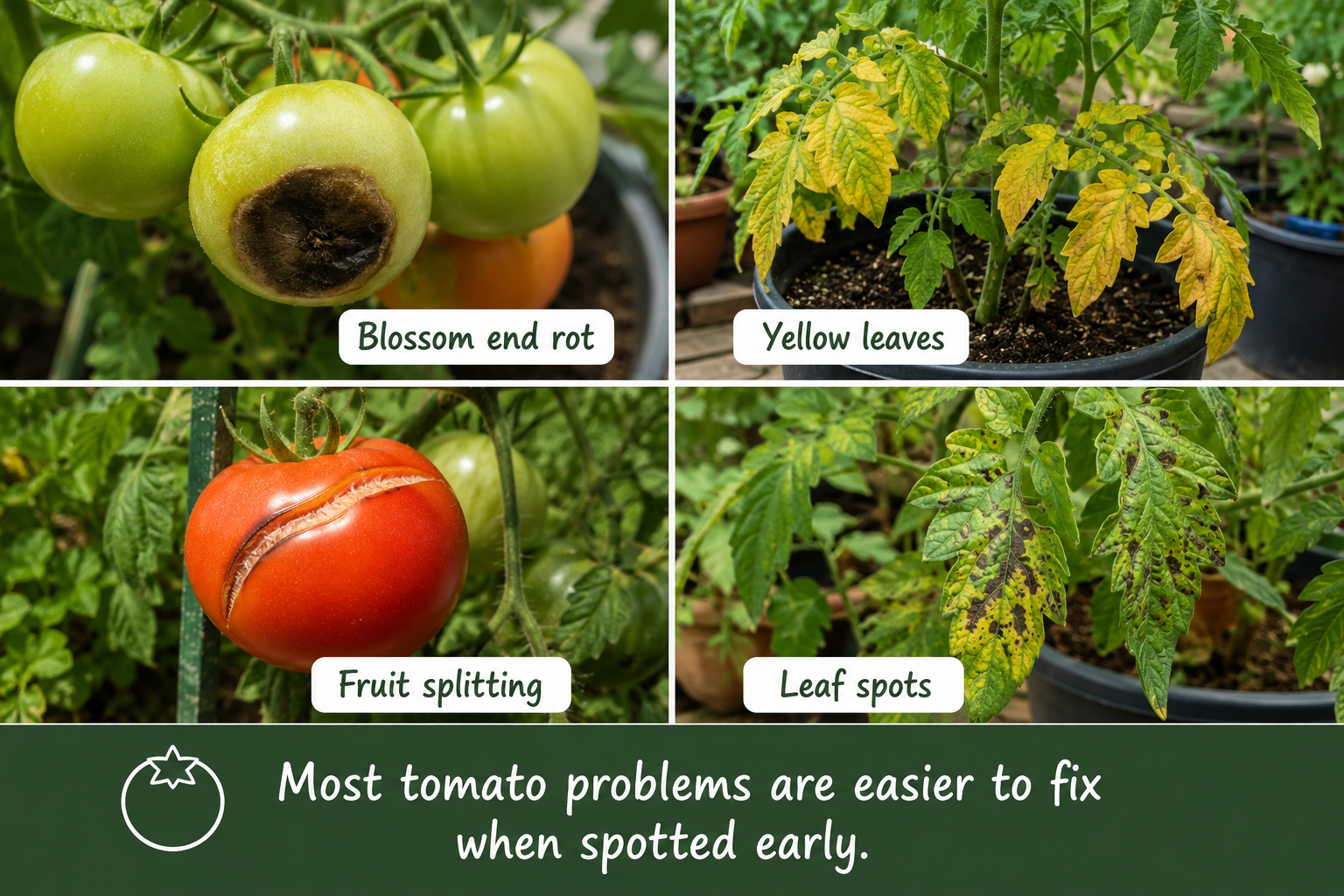
Blossom End Rot
What it looks like: A black or brown sunken patch at the bottom of the tomato.
Main cause: The plant struggles to move calcium into the fruit, often because watering has been inconsistent.
How to prevent it:
- Water regularly
- Do not let the pot dry out completely
- Use a large enough container
- Mulch the surface of the compost
- Avoid overfeeding with nitrogen
Blossom end rot is frustrating, but it does not mean your whole plant is ruined. Improve watering consistency and later fruits may be fine.
Fruit Splitting
What it looks like: Cracks around the tomato skin.
Main cause: The fruit swells quickly after sudden heavy watering or rain.
How to prevent it:
- Keep watering consistent
- Move pots under cover before heavy rain if possible
- Pick nearly ripe tomatoes before storms
Split tomatoes are usually still usable if picked quickly before they spoil.
Yellow Leaves
A few yellow lower leaves are normal as the plant ages. But lots of yellowing can mean:
- Too much water
- Too little water
- Lack of nutrients
- Poor drainage
- Natural ageing later in the season
Check the compost before guessing. If it is wet and heavy, reduce watering. If it is dry and pulling away from the pot edge, water deeply.
Aphids
Aphids are small sap-sucking insects that gather on soft new growth.
You can often remove them by:
- Squashing small clusters by hand
- Spraying with water
- Encouraging ladybirds and other beneficial insects
Check the undersides of leaves regularly.
Tomato Hornworms and Caterpillars
Large caterpillars can chew leaves quickly. If you see missing leaves or droppings, inspect the plant carefully.
Remove caterpillars by hand and move them away from your plant.
Blight and Leaf Spots
Fungal diseases can cause dark marks, yellowing, or collapsing leaves.
To reduce the risk:
- Water at the base
- Avoid wetting leaves
- Improve airflow
- Remove affected leaves
- Do not overcrowd plants
- Keep pots away from old infected tomato debris
If blight is common in your area, growing in pots can help because you can move plants under cover during wet weather.
18. Mulch the Top of the Pot
Mulching means covering the surface of the compost with a thin layer of organic material.
Good mulch options include:
- Straw
- Shredded leaves
- Compost
- Bark chips
- Grass clippings in a thin layer
Mulch helps hold moisture in the pot, keeps roots cooler in hot weather, and reduces compost splashing onto the leaves.
Leave a little space around the stem so it does not stay wet.
19. Growing Tomatoes in Pots on a Balcony
Balconies can be brilliant places for tomatoes, but they have a few special challenges.
Balcony Tomato Tips
- Choose compact bush or dwarf varieties.
- Use heavy pots that will not blow over.
- Check watering daily in summer.
- Secure tall supports to prevent wind damage.
- Avoid placing pots where water drains onto neighbours below.
- Choose cherry tomatoes for reliable harvests in small spaces.
A sunny balcony can become a mini tomato garden with just two or three well-chosen containers.
20. When to Harvest Tomatoes
Tomatoes are ready to harvest when they have good colour, feel slightly firm, and come away from the plant with a gentle twist.
For the best flavour, let tomatoes ripen on the plant when possible.
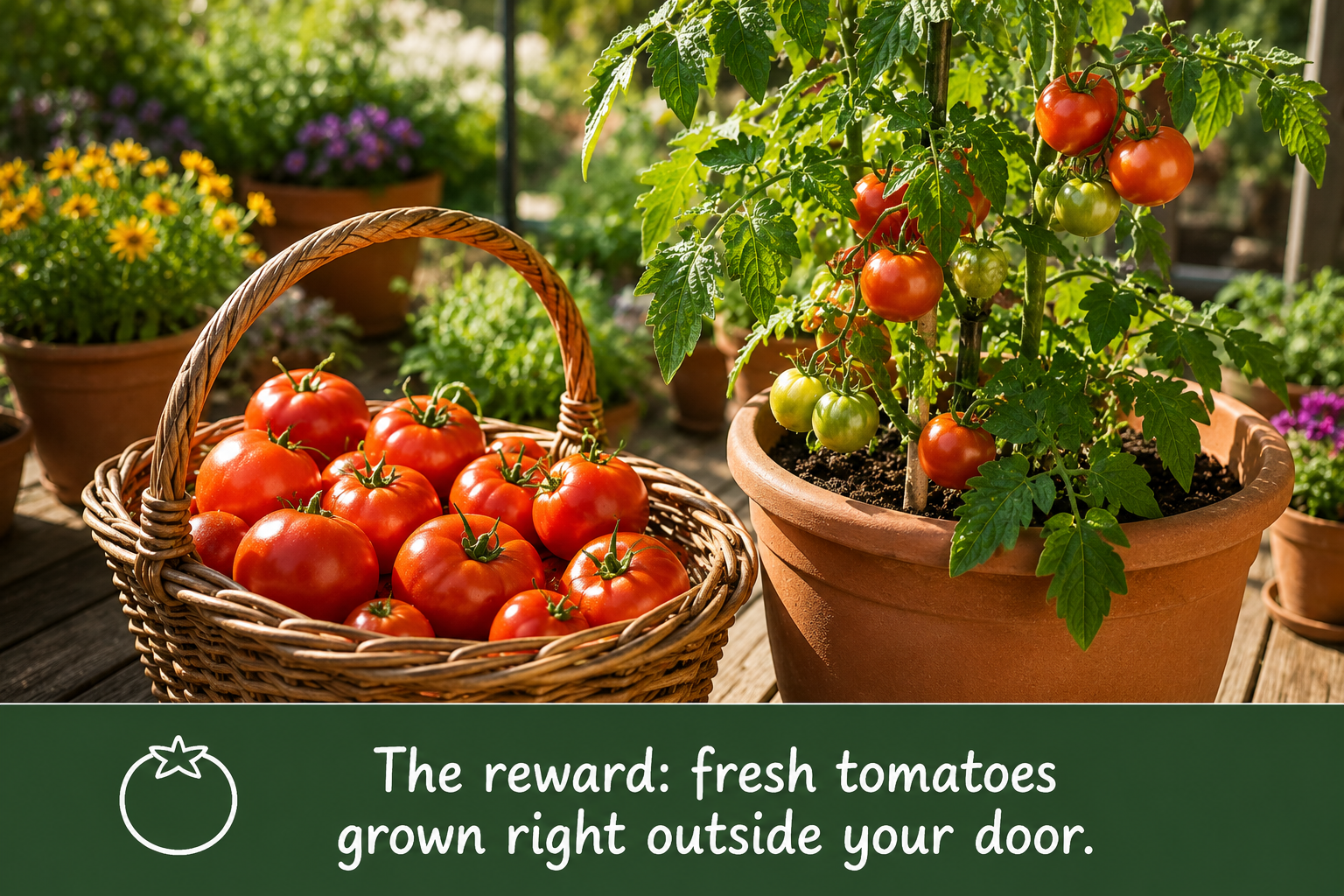
However, you can pick tomatoes slightly early if:
- Heavy rain is coming
- Frost is forecast
- The fruit is starting to split
- Birds or pests are attacking them
- The plant is overloaded
Tomatoes that have started to change colour can usually finish ripening indoors on a kitchen counter.
21. How to Store Homegrown Tomatoes
Do not put freshly picked tomatoes in the fridge unless you really have to.
Cold temperatures can spoil the flavour and texture. Instead, store tomatoes at room temperature in a single layer, out of direct sunlight.
Use the ripest ones first.
Homegrown tomatoes are best enjoyed simply: sliced with salt, tucked into a sandwich, stirred into pasta, roasted with herbs, or eaten warm from the plant while you stand proudly beside your pot.
That is one of the great joys of growing your own.
Common Mistakes to Avoid
Here are the mistakes that most often cause problems with tomatoes in pots:
-
Using a pot that is too small Small pots dry out fast and restrict roots.
-
Planting too many tomatoes in one container One strong plant is better than several crowded plants.
-
Using garden soil instead of potting compost Garden soil can compact badly in pots.
-
Forgetting drainage holes Waterlogged roots can kill tomato plants.
-
Watering randomly Inconsistent watering causes stress, splitting, and blossom end rot.
-
Not feeding once fruit appears Potted tomatoes need regular nutrients.
-
Adding support too late Late staking can damage roots and stems.
-
Choosing a huge vining variety for a tiny balcony Match the variety to the space.
Avoid these mistakes and you are already halfway to a healthier crop.
Best Beginner Setup for Growing Tomatoes in Pots
If you want the simplest setup, start with this:
- One bush tomato plant
- One 30–45cm pot with drainage holes
- Peat-free multipurpose compost
- One bamboo cane or tomato cage
- Sunny spot with 6–8 hours of light
- Daily watering checks
- Tomato feed once flowers or fruit appear
This is enough to grow your first crop of homegrown tomatoes.
Frequently Asked Questions
Can tomatoes grow well in pots?
Yes, tomatoes can grow very well in pots if the container is large enough, the compost is good, and watering is consistent. Bush, patio, dwarf, and cherry tomatoes are especially good choices for containers.
What size pot is best for tomatoes?
A 30–45cm pot is a good size for many patio or bush tomatoes. For larger tomato plants, use a 5-gallon container or bigger. Tall cordon tomatoes usually need much larger pots.
Can I grow tomatoes in a 5-gallon bucket?
Yes, a 5-gallon bucket can work well for one tomato plant, especially a bush or determinate variety. Make sure you drill several drainage holes before planting.
How many tomato plants can I put in one pot?
For most containers, grow one tomato plant per pot. Tomatoes need plenty of root space, water, nutrients, and airflow.
What is the best compost for tomatoes in pots?
Use peat-free multipurpose compost, peat-free tomato compost, or a good container potting mix. Avoid ordinary garden soil because it can become compacted and poorly drained in pots.
How often should I water tomatoes in pots?
Check the compost every day in warm weather. Water when the top few centimetres feel dry. In hot summer weather, potted tomatoes may need watering once or twice a day.
Should I feed tomatoes in pots?
Yes. Once flowers or small fruits appear, feed with a tomato fertiliser every 1–2 weeks. Potted tomatoes need feeding because nutrients wash out of the compost when you water.
Do tomatoes in pots need full sun?
Tomatoes grow best with 6–8 hours of direct sunlight per day. A warm, sunny, sheltered position gives the best results.
Do I need to prune potted tomatoes?
Bush tomatoes usually need little pruning. Cordon or indeterminate tomatoes benefit from removing side shoots, also called suckers, to keep the plant controlled and productive.
Why are my potted tomatoes splitting?
Tomatoes often split when watering is inconsistent or when a dry plant suddenly receives a lot of water. Keep the compost evenly moist and pick nearly ripe fruit before heavy rain if possible.
Why do my tomatoes have black bottoms?
This is usually blossom end rot. It is often linked to inconsistent watering, especially in pots. Use a large container, water regularly, and avoid letting the compost dry out completely.
Can I grow tomatoes in pots indoors?
You can grow tomatoes indoors if you have very strong light, warmth, airflow, and enough space. A sunny windowsill may work for small dwarf varieties, but most tomatoes crop better outdoors, in a greenhouse, or under strong grow lights.
Final Thoughts
Growing tomatoes in pots is simple, joyful, and surprisingly rewarding. You do not need a big garden or expensive equipment. You just need a sunny spot, a large enough pot, good compost, steady watering, and a little daily attention.
Start with one container and one easy bush tomato variety. Watch it grow, learn its habits, and enjoy the first warm tomato you pick with your own hands.
Once you taste your first homegrown tomato, you will understand why so many gardeners become completely hooked.
Happy growing!